
The Best Electric Awnings for Residential Patios
If you’ve spent any time researching shade solutions for your patio, you already know the options are overwhelming. Fixed canopies, pergolas, shade sails, manual crank awnings — and then there are electric awnings, which sit at the top of the pile for good reason. This guide breaks down everything you need to know to find the best electric awning for your residential patio, including what actually separates a good one from a mediocre one, which brands are worth your money, and what homeowners in places like Columbus and Dayton, Ohio are choosing right now.
What Is an Electric Awning and Why Does It Matter for Your Patio?
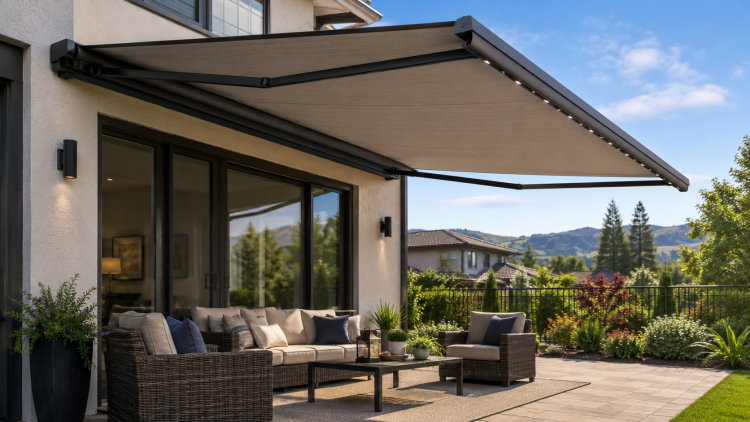
An electric awning, also called a motorized retractable awning, is a fabric shade system mounted to the exterior of your home that extends and retracts at the push of a button or the tap of a remote. Unlike manual awnings that require a hand crank, electric awnings use a built-in motor to do the work. Some models connect to smart home systems. Others come with built-in wind and sun sensors that deploy or retract the awning automatically based on weather conditions.
For residential patios, that convenience is a genuine quality-of-life upgrade. You stop avoiding your patio in the afternoon because the sun is brutal. You stop forgetting to retract your awning before a storm rolls in. You just use the thing, which is the whole point.
The best motorized patio awnings also hold their structure better than fabric-only alternatives. A quality electric awning with a metal frame and commercial-grade fabric will outlast a shade sail or a basic pop-up canopy by years, sometimes by a decade or more.
What to Look for in a Residential Electric Patio Awning
Before getting into specific brands and products, it helps to understand what actually makes one electric awning better than another. There are a few things worth paying attention to.
Frame Construction
The frame is the backbone of the awning. Look for powder-coated aluminum frames rather than steel, since aluminum handles moisture and temperature swings better without rusting. In states like Ohio where you get cold winters, wet springs, and humid summers, frame quality directly affects how long your awning lasts.
Fabric Quality
Not all awning fabric is created equal. Solution-dyed acrylic fabrics hold color much longer than coated polyester and resist mold and mildew more effectively. Sunbrella is the gold standard in awning fabric and appears across most premium electric awning brands. If a company does not specify fabric type, that is usually a red flag.
Motor and Drive System
A quiet, reliable motor matters more than most buyers realize until they own an awning with a loud or finicky one. Somfy is the most widely respected motor brand in the industry and is used by several top awning manufacturers. The motor should come with a warranty of at least five years. If the manufacturer only warrants the motor for one or two years, manage your expectations accordingly.
Projection and Width
Projection refers to how far the awning extends out from your home. For a standard patio or deck, you typically want at least eight feet of projection to make a meaningful difference in shade coverage. Width options vary widely, from around eight feet on the low end to over twenty feet for large patios. Measure your space carefully before settling on a size.
Sensors and Smart Home Integration
Wind sensors are not just a luxury feature. They protect your investment by retracting the awning automatically when wind speeds reach a threshold that could damage the fabric or frame. Sun sensors can deploy the awning when UV levels hit a set point and retract it at dusk. If your budget allows, these features are worth adding.
The Best Electric Awning Brands for Residential Patios
SunSetter Motorized Awnings
SunSetter is probably the most recognized name in residential electric awnings in the United States, and for good reason. They have been making retractable awnings specifically for homeowners for decades, and their motorized line covers a wide range of sizes and fabric options. SunSetter awnings are available in widths from around eleven feet up to twenty feet, with projections of up to eleven feet on certain models.
What makes SunSetter a strong choice for residential patios is the combination of price, availability, and support infrastructure. They sell direct to consumers and also through authorized dealers and installers, which means you can get professional installation without a massive markup. Their motorized models come with a radio-controlled remote and are compatible with optional wind sensors.
SunSetter fabric options include their standard acrylic weave and a higher-end Sunbrella fabric on select models. If you are going with SunSetter, it is worth paying the difference for the Sunbrella fabric option. It holds up significantly better over time.
The one honest drawback with SunSetter is that they sit in the mid-range in terms of build quality. They are not the most premium option on the market, but they deliver very solid performance at a price point most homeowners can work with.
SunPro Retractable Awnings
SunPro is a step up from SunSetter in terms of build quality and is the brand that Buckeye State Awnings installs across Columbus, Dayton, and Dublin, Ohio. SunPro awnings use commercial-grade aluminum frames and are built to handle tougher weather conditions. The motorized versions operate on Somfy motors, which is exactly what you want in an electric awning system.
SunPro offers a wider selection of projection options and fabric choices than SunSetter, and because they are installed through certified dealers rather than DIY, the installation quality tends to be more consistent. For Ohio homeowners dealing with unpredictable weather, the sturdier frame construction and better motor system translate into a longer-lasting product with fewer service calls over the years.
If you are comparing SunPro to SunSetter side by side, SunPro wins on durability and motor quality. SunSetter is easier to source and marginally cheaper upfront, but the long-term value tilts toward SunPro for homeowners who want to buy once and not revisit the decision for fifteen years.
Sunsetter Vista vs. Standard: Which Model Is Right for Your Patio?
Within the SunSetter lineup, the Vista model is worth calling out separately. The Vista uses a screen-style mesh fabric rather than a solid awning, which allows you to still see through the awning while blocking a significant portion of UV and glare. For homeowners with a view they do not want to lose — a backyard pool, a landscaped garden, or even just an open sky — the Vista model offers a middle ground between full shade and open exposure.
The standard SunSetter motorized model blocks more direct sun but is opaque. For patios on the west or south-facing side of a home where afternoon sun is the primary issue, the standard model is usually the better call.
Marygrove Motorized Awnings
Marygrove has been manufacturing awnings since 1933 and is one of the few companies in this space that makes everything in-house. That matters because it means tighter quality control across the frame, fabric, and hardware. Marygrove’s electric awning line includes a range of residential patio models with Somfy motors, Sunbrella fabric options, and solid aluminum frame construction.
Marygrove is also active across Ohio, including Columbus and Dayton, which makes them a legitimate competitor in the same regional market. Their pricing tends to land above SunSetter but in a similar range to SunPro. What differentiates Marygrove is the in-house manufacturing model and a longer track record. If you want a company that has been refining this product for nearly a century, Marygrove deserves a serious look.
Electric Awnings for Patios in Ohio: What the Local Climate Demands
This section is specifically relevant if you are shopping for a motorized patio awning in Central Ohio, but it applies broadly to any region with similar weather patterns.
Ohio is not an easy climate for outdoor structures. Summers bring intense UV exposure and high humidity. Spring and fall bring wind and rain. Winters are cold enough that leaving an awning out can cause damage from ice and snow load.
What this means practically is that the best electric awning for an Ohio patio needs to handle moisture without degrading fabric prematurely, use a frame material that does not corrode in freeze-thaw cycles, come with a wind sensor or at minimum have a motor that can handle frequent operation as you deploy and retract through changing weather, and use solution-dyed acrylic or Sunbrella fabric that resists UV fading through long summer exposure.
An awning that performs fine in a dry southern climate might deteriorate quickly in Ohio. This is one reason why buying from a local installer who knows the climate and can recommend the right spec for your specific exposure is worth more than ordering the cheapest option online and hoping for the best.
How Much Do the Best Electric Patio Awnings Cost?
Pricing on electric awnings varies considerably depending on size, brand, fabric, and whether you are including professional installation.
At the entry level, a basic motorized awning from a mass-market brand might run between $1,500 and $2,500 for the unit alone. Mid-range options like SunSetter’s motorized line typically fall between $2,500 and $4,500 installed, depending on size and options. Premium brands like SunPro and Marygrove with larger projections, Somfy motors, and Sunbrella fabric can run from $4,500 to $8,000 or more installed, particularly for wider configurations covering large patios or decks.
Adding a wind sensor typically adds $200 to $400. Smart home integration can add another $150 to $300 depending on the system.
The honest framing on cost is this: a cheap electric awning that fails in three years costs more in the long run than a quality awning that runs without issue for fifteen. The parts of the awning that matter most — the motor, the frame, and the fabric — are exactly where budget products cut corners. Paying more upfront for a proven brand with a solid warranty and local installation support is the better financial decision for most homeowners.
Questions to Ask Before You Buy
Before committing to a motorized patio awning, run through these questions with any company you are considering.
What motor brand does the awning use? If they do not know or it is not Somfy or a comparably reputed brand, dig deeper before buying.
What is the fabric construction? Solution-dyed acrylic or Sunbrella is the answer you want.
What does the warranty cover and for how long? Look for at least five years on the motor and fabric separately.
Does the company handle installation directly or subcontract it? A company that controls its own installation crew has more accountability for quality.
What is the service process if something goes wrong after installation? A company with no clear answer to that question is one you should think twice about.
The Bottom Line on Motorized Patio Awnings
The best electric awning for your residential patio is the one that fits your space, handles your climate, uses quality components, and is backed by people who will still answer the phone after the installation is done. For most homeowners, that means investing in a mid-to-premium brand like SunPro or Marygrove, getting it professionally installed by a local company with a real track record, and pairing it with a wind sensor if you live somewhere with unpredictable weather.
If you are in Columbus, Dayton, Dublin, or the surrounding communities in Central Ohio, Buckeye State Awnings installs SunPro electric awnings and motorized screens with the kind of hands-on local service that a national brand cannot match. Explore our retractable awnings installation services to see what we install and why Ohio homeowners keep choosing us, or call us directly at (614) 683-4870 to schedule your free estimate and find out which motorized patio awning is the right fit for your home.

Leave a Reply